
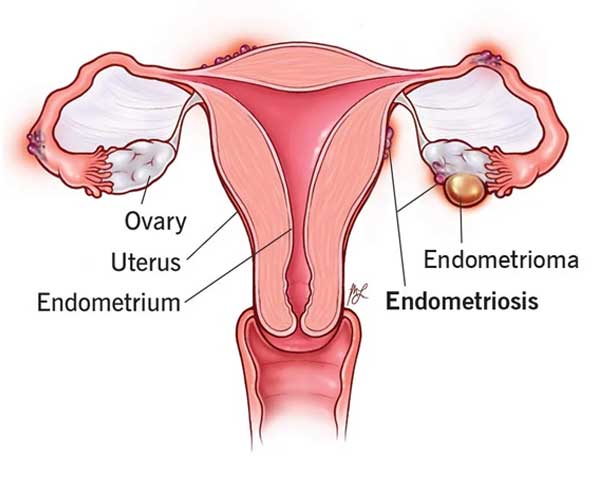
Endometriosis is a chronic medical condition in which tissue similar to the lining of the uterus (called the endometrium) grows outside the uterus. This tissue can grow on the ovaries, fallopian tubes, outer surface of the uterus, and other organs within the pelvis.
Although this tissue behaves like normal uterine lining — thickening, breaking down, and bleeding with each menstrual cycle — it has no way to exit the body, leading to pain, inflammation, and the formation of scar tissue.
What Are the Symptoms of Endometriosis?
The symptoms can vary, and some women may have no symptoms at all, while others may experience severe discomfort. Common signs include:
-
Painful periods (dysmenorrhea)
-
Pelvic pain, often associated with the menstrual cycle
-
Pain during or after sexual intercourse
-
Pain with bowel movements or urination (especially during menstruation)
-
Excessive bleeding during periods or between periods
-
Difficulty getting pregnant (infertility)
-
Fatigue, bloating, nausea, or lower back pain
What Causes Endometriosis?
The exact cause of endometriosis is not fully known, but several theories include:
-
Retrograde menstruation (when menstrual blood flows backward into the pelvic cavity)
-
Genetic factors
-
Immune system disorders
-
Hormonal imbalances
-
Surgical scar implantation (e.g., after a C-section)
Who Is at Risk?
You may be at a higher risk of developing endometriosis if you:
-
Have a family history of the condition
-
Started menstruating at an early age
-
Have short menstrual cycles (less than 27 days)
-
Have never given birth
-
Have high levels of estrogen
How Is Endometriosis Diagnosed?
Diagnosis usually includes:
-
Detailed medical history and physical/pelvic examination
-
Ultrasound (to detect cysts or growths)
-
MRI (in some cases)
-
Laparoscopy (a minor surgical procedure that allows direct viewing and biopsy of endometrial tissue)
What Are the Treatment Options?
Treatment depends on the severity of symptoms and the desire for future pregnancy. Options may include:
-
Pain relief medication such as NSAIDs
-
Hormone therapy to reduce or stop menstruation
-
Hormonal contraceptives, including birth control pills, patches, or IUDs
-
Laparoscopic surgery to remove endometrial growths
-
Hysterectomy (removal of the uterus) in severe cases where other treatments fail
Living with Endometriosis
Endometriosis is a long-term condition, but with proper management, many women can lead a healthy and active life. Early diagnosis and personalized treatment are key to improving quality of life and managing symptoms effectively.
Book Appointment