
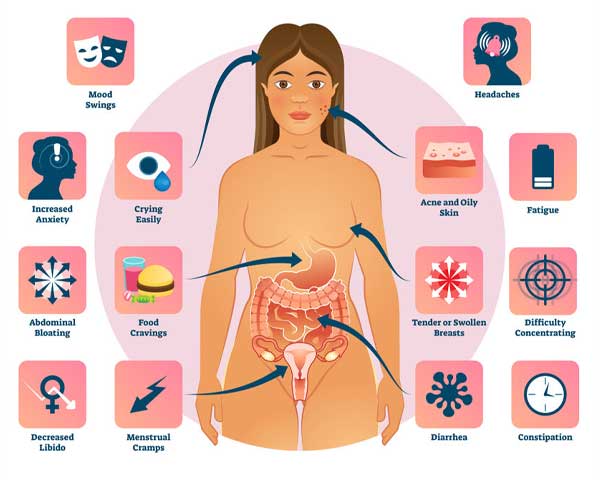
Premenstrual Syndrome (PMS) refers to a group of physical, emotional, and behavioral symptoms that occur in women 1 to 2 weeks before their menstrual period. These symptoms usually improve once menstruation begins and disappear afterward.
PMS is very common, affecting up to 75% of menstruating women, and symptoms can range from mild to severe.
Common Symptoms of PMS
PMS symptoms vary from woman to woman, but may include:
Physical Symptoms:
-
Bloating
-
Breast tenderness
-
Headaches
-
Fatigue
-
Acne breakouts
-
Joint or muscle pain
-
Weight gain due to fluid retention
-
Constipation or diarrhea
Emotional & Behavioral Symptoms:
-
Mood swings
-
Irritability or anger
-
Anxiety or restlessness
-
Depression or sadness
-
Difficulty concentrating
-
Food cravings (especially for sweets or salty foods)
-
Sleep disturbances
What Causes PMS?
The exact cause of PMS is not fully understood, but it is believed to be related to hormonal changes during the menstrual cycle, particularly fluctuations in estrogen and progesterone. Other contributing factors may include:
-
Chemical changes in the brain (e.g., serotonin levels)
-
Stress or emotional issues
-
Poor diet or lack of exercise
-
Family history of PMS or mood disorders
Diagnosis
There is no specific test for PMS. Diagnosis is usually based on:
-
Reviewing symptoms and their timing
-
Keeping a symptom diary for at least two menstrual cycles
-
Ruling out other conditions such as depression, thyroid disorders, or anxiety
Treatment and Management
PMS can often be managed with lifestyle changes and, in some cases, medical treatment:
Lifestyle Tips:
-
Eat a healthy, balanced diet (low in salt, sugar, and caffeine)
-
Exercise regularly
-
Get enough sleep
-
Reduce stress through relaxation techniques like yoga or meditation
-
Avoid alcohol and smoking
Medical Options:
-
Pain relievers (e.g., ibuprofen or paracetamol)
-
Hormonal birth control to regulate hormone levels
-
Antidepressants (for severe emotional symptoms)
-
Calcium, magnesium, vitamin B6 supplements (under doctor’s guidance)
-
Diuretics (to reduce bloating)
When to See a Doctor
You should seek medical advice if:
-
PMS symptoms interfere with your daily life, work, or relationships
-
You suspect you may have Premenstrual Dysphoric Disorder (PMDD) — a more severe form of PMS
-
Over-the-counter treatments or lifestyle changes are not helping
Book Appointment