
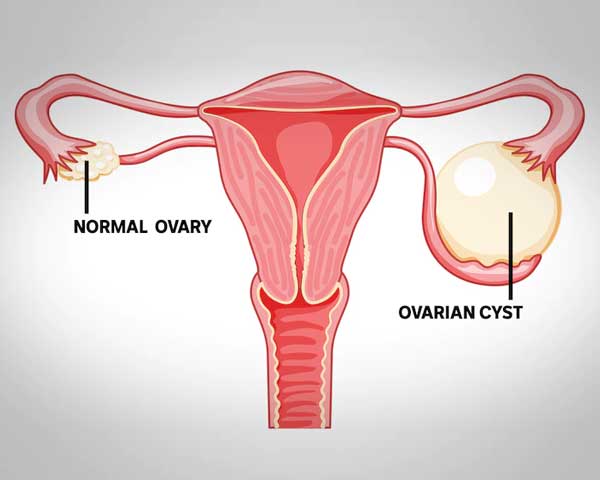
An ovarian cyst is a fluid-filled sac that forms on or inside an ovary. Most ovarian cysts are harmless (benign) and go away on their own without treatment. However, some cysts can cause pain, discomfort, or complications and may require medical attention.
Ovarian cysts are common in women of reproductive age, but they can occur at any age.
Types of Ovarian Cysts
-
Functional Cysts
The most common type, related to the menstrual cycle:-
Follicular cyst: Forms when a follicle doesn't release an egg.
-
Corpus luteum cyst: Forms after an egg is released.
-
-
Pathological Cysts
These are less common and may require treatment:-
Dermoid cysts (may contain hair, skin, or teeth)
-
Cystadenomas (filled with watery or mucous material)
-
Endometriomas (related to endometriosis)
-
-
Polycystic Ovaries
A condition where multiple small cysts form on the ovaries, often linked to Polycystic Ovary Syndrome (PCOS).
Symptoms of Ovarian Cysts
Most small cysts cause no symptoms. When symptoms do occur, they may include:
-
Pelvic pain (dull or sharp)
-
Abdominal bloating or fullness
-
Pain during intercourse
-
Painful periods
-
Frequent urination or difficulty emptying the bladder
-
Nausea or breast tenderness
-
Irregular menstrual cycles
Emergency symptoms (which may indicate a ruptured cyst or ovarian torsion) include:
-
Sudden, severe abdominal pain
-
Fever or vomiting
-
Dizziness or fainting
Seek immediate medical help in such cases.
Causes and Risk Factors
Ovarian cysts can be caused by:
-
Hormonal imbalances
-
Pregnancy
-
Endometriosis
-
Pelvic infections
-
Previous ovarian cysts
Diagnosis
To diagnose an ovarian cyst, your doctor may perform:
-
Pelvic examination
-
Ultrasound (to check the size, location, and type of cyst)
-
Blood tests (to rule out cancer or check hormone levels)
-
Laparoscopy (a minor surgical procedure in selected cases)
Treatment Options
Treatment depends on the type, size, and symptoms:
Watchful Waiting
-
Many cysts resolve on their own in a few weeks or months.
-
Regular follow-up and ultrasound may be advised.
Medications
-
Birth control pills to prevent the formation of new cysts
-
Pain relievers to manage symptoms
Surgery
-
Cystectomy (removal of the cyst, preserving the ovary)
-
Oophorectomy (removal of the entire ovary, if necessary)
Surgery is recommended if the cyst is large, persistent, causes symptoms, or looks suspicious.
Book Appointment