
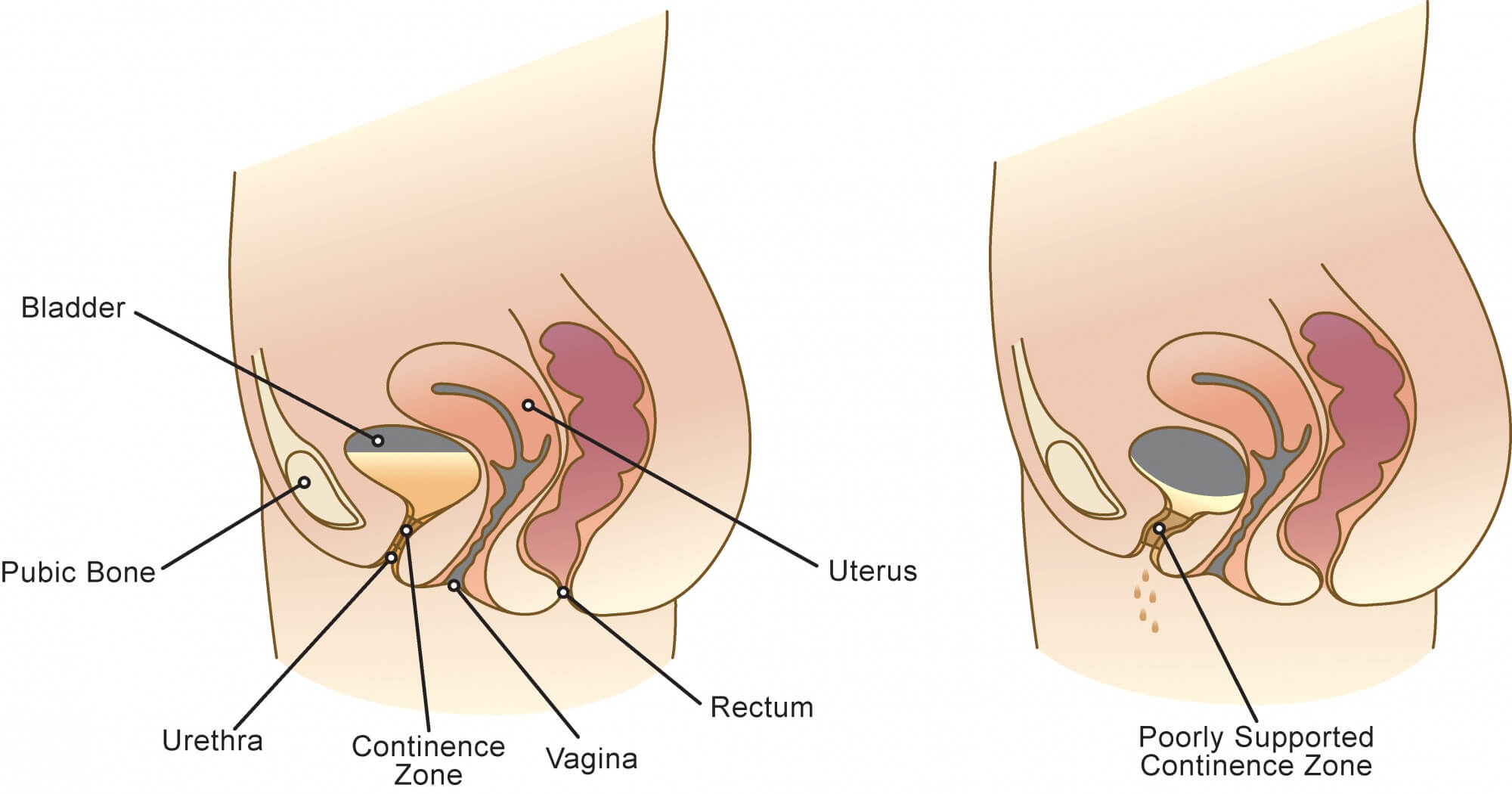
Stress Urinary Incontinence is the involuntary leakage of urine during activities that put pressure (or "stress") on the bladder. This may happen when laughing, sneezing, coughing, exercising, or even lifting something heavy. It is a common condition, especially among women after childbirth or menopause, but it is not a normal part of aging and can be treated effectively.
What Causes Stress Urinary Incontinence?
Stress incontinence occurs when the pelvic floor muscles or urethral sphincter become weak and are unable to prevent urine from leaking during physical movement or pressure.
Common causes include:
-
Pregnancy and vaginal childbirth
-
Menopause (due to decreased estrogen levels)
-
Pelvic surgery (like hysterectomy)
-
Aging of pelvic muscles
-
Obesity
-
Chronic coughing (due to smoking or respiratory illness)
-
High-impact sports (over time)
Symptoms
-
Leaking urine when:
-
Sneezing or coughing
-
Laughing
-
Standing up
-
Exercising or jumping
-
Lifting heavy objects
-
-
Wetness or dampness in underwear
-
Avoiding certain activities for fear of leakage
These symptoms can affect daily life and confidence, but with proper treatment, most women experience great improvement.
Diagnosis
To diagnose SUI, a gynecologist or urologist may perform:
-
Detailed medical history
-
Physical and pelvic examination
-
Urine tests (to rule out infection)
-
Bladder diary (to track frequency and leakage)
-
Urodynamic tests (in complex cases)
Treatment Options
Treatment depends on the severity of symptoms and individual needs. Options include:
1. Lifestyle Changes
-
Reducing caffeine and alcohol
-
Losing weight if overweight
-
Avoiding bladder irritants
-
Managing chronic cough or constipation
2. Pelvic Floor Exercises (Kegels)
-
Strengthen the pelvic muscles
-
Highly effective when done consistently under guidance
3. Medications
-
In selected cases, medicines may help improve urethral tone (though limited options are available specifically for SUI)
4. Vaginal Devices (Pessaries)
-
Support devices inserted into the vagina to help prevent leakage
5. Surgical Treatment
Recommended when conservative methods fail, especially in moderate to severe cases.
-
Mid-urethral sling procedure (minimally invasive and very effective)
-
Bulking agents (injections to thicken the urethral wall)
-
Other procedures based on individual anatomy and needs
Prevention
-
Perform regular Kegel exercises
-
Maintain a healthy body weight
-
Manage chronic cough or constipation
-
Avoid heavy lifting and straining
Book Appointment